
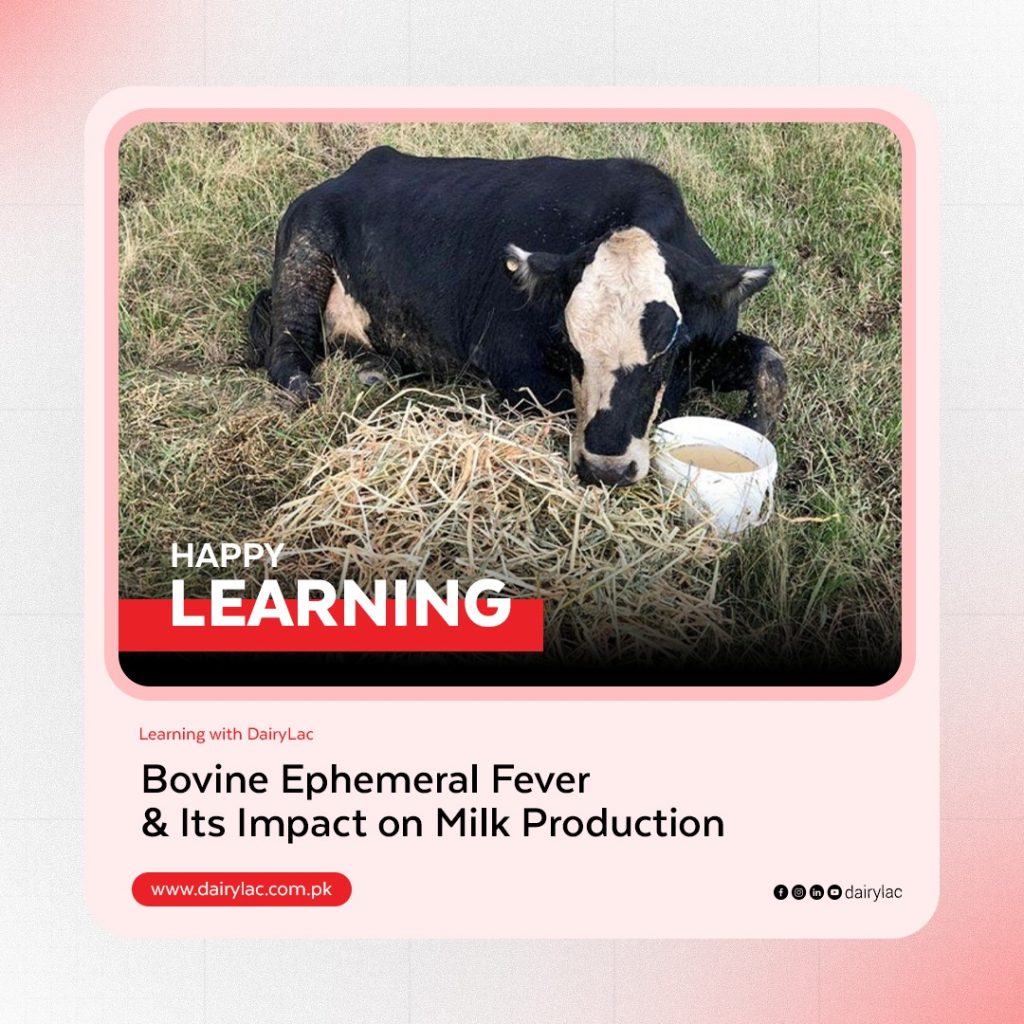
Bovine Ephemeral Fever (BEF), commonly known as “three-day sickness,” is a viral disease that can affect cattle and buffaloes, particularly during periods when insect activity is high. For dairy farmers, the concern is not only the illness itself but also its effect on feed intake, mobility, milk production, and overall farm performance. In Pakistan, where dairy farming is an important source of income for many families, understanding BEF and taking timely preventive measures can help reduce production losses.
What Is Bovine Ephemeral Fever?
Bovine Ephemeral Fever is a viral disease mainly transmitted by biting insects such as mosquitoes and other blood-feeding vectors. The disease can spread quickly through a herd when environmental conditions favor insect activity.
Affected animals may develop a sudden fever along with signs such as stiffness, muscle weakness, reluctance to move, reduced appetite, and difficulty standing or walking. Although many animals recover within a few days with appropriate veterinary care, recovery can take longer in some cases.
Common Symptoms of Bovine Ephemeral Fever in Cattle
Farmers should pay attention to sudden changes in their animals, particularly during periods of increased insect activity.
Common signs may include:
- Sudden high body temperature
- Reduced appetite and water intake
- Stiffness or difficulty walking
- Muscle weakness
- Excessive salivation
- Swelling around joints in some cases
- Reduced milk production
- Animals spending more time lying down
Early recognition is important because sick animals may quickly become weak and require supportive care.
How Bovine Ephemeral Fever Affects Milk Production
One of the biggest concerns for dairy farmers is the impact of Bovine Ephemeral Fever on milk production. When a cow develops a fever, its normal feeding and drinking behavior can change. Reduced feed intake means less energy and nutrients are available for milk synthesis.
The production decline may result from several factors:
Reduced Feed Intake
Fever and general weakness can cause animals to eat less. Since milk production depends heavily on consistent nutrient intake, even a short period of poor feeding can affect daily milk output.
Physical Stress and Reduced Movement
BEF can cause stiffness and muscle pain, making affected cattle reluctant to stand or walk. This can interfere with feeding, drinking, and normal farm routines.
Recovery Period
Even after the fever subsides, an animal may require additional time to return to its previous feeding and production level. High-producing dairy cows may need careful nutritional management during recovery.
Managing Dairy Cows During BEF
Farmers should contact a qualified veterinarian when BEF is suspected. Treatment generally focuses on supportive care and managing the animal’s condition according to professional veterinary advice.
During recovery, farmers should focus on:
- Providing easy access to clean drinking water
- Offering fresh and palatable feed
- Keeping animals in a comfortable, clean area
- Minimising unnecessary movement and stress
- Monitoring body temperature, appetite, and milk production
- Following veterinary recommendations for treatment and recovery
Farmers should avoid giving medicines without professional guidance, particularly when the animal is producing milk for human consumption.
Nutrition Support After Bovine Ephemeral Fever
Good nutrition becomes especially important when an animal is recovering from illness. A balanced dairy ration can help provide the energy, protein, fiber, vitamins, and minerals required for normal body functions and milk production.
Maintaining good dairy cattle nutrition throughout the year can also help animals maintain body condition and support normal immune function. Reliable feed solutions such as DairyLac can be incorporated into a well-managed feeding program according to the animal’s nutritional requirements.
The goal should not simply be to increase feed quantity, but to provide a balanced diet that supports efficient nutrient utilization and consistent dairy performance.
How Farmers Can Reduce the Risk of BEF
Because BEF is associated with insect vectors, reducing exposure to biting insects is an important part of farm management.
Farmers can:
- Keep animal housing clean and dry
- Reduce standing water around the farm
- Improve drainage
- Use appropriate insect-control measures
- Maintain good ventilation
- Monitor animals regularly during high-risk periods
- Seek veterinary advice about suitable preventive measures
Good herd management, nutrition, hygiene, and early detection can collectively reduce the impact of disease on farm productivity.
Conclusion
Bovine Ephemeral Fever and its impact on milk production should not be overlooked by dairy farmers. Although many affected animals recover, fever, reduced feed intake, weakness, and the recovery period can temporarily affect milk production and farm income.
Early recognition, veterinary support, comfortable housing, insect-control measures, and balanced nutrition are important parts of managing the disease. For farmers looking to maintain consistent herd performance, combining good animal-health practices with quality dairy feed solutions such as DairyLac can support a stronger and more productive herd.
FAQs
Is Bovine Ephemeral Fever contagious between cattle?
BEF is primarily spread by insect vectors rather than direct animal-to-animal contact. Farmers should still follow veterinary advice and appropriate herd-management practices when cases occur.
How long does Bovine Ephemeral Fever usually last?
The disease is often short in duration, which is why it is commonly called three-day sickness. However, weakness and reduced production can continue during recovery.
Can BEF reduce milk yield?
Yes. Fever, reduced appetite, stress, and weakness can temporarily lower milk production.
What should farmers do if they suspect BEF?
A veterinarian should be contacted for proper diagnosis and treatment advice. Supportive care, hydration, nutrition, and monitoring are important during recovery.
Can good nutrition prevent BEF?
Good nutrition supports overall animal health and performance, but it should not be considered a direct prevention or cure for BEF. Vector control and veterinary guidance remain important.