
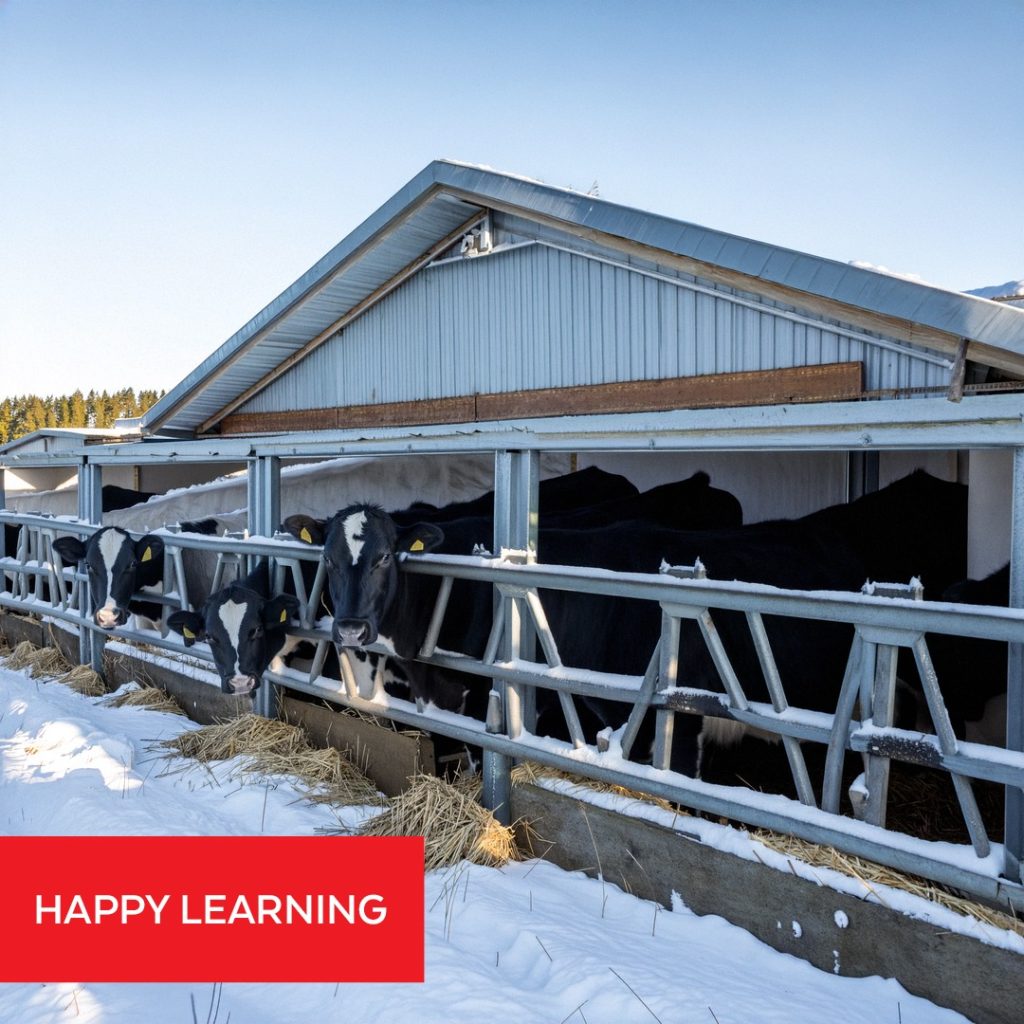
Cold weather can be challenging for livestock farmers, especially in regions where winter temperatures drop significantly. Poor housing during winter leads to stress, low feed intake, reduced milk production, and a higher risk of disease. Designing and maintaining winter-ready livestock housing systems is essential to protect animal health and maintain productivity throughout the cold season.
With proper planning and management, farmers can ensure their livestock stay warm, comfortable, and productive during winter.
1. Importance of Winter-Ready Livestock Housing
Livestock are sensitive to cold stress, particularly young calves, lactating dairy cows, and older animals. Exposure to cold winds, damp bedding, and poor ventilation can weaken immunity and increase energy requirements.
A well-designed winter housing system helps:
-
Reduce cold stress
-
Maintain body temperature
-
Improve feed efficiency
-
Support consistent milk production
Comfortable animals perform better even in harsh climates.
2. Proper Shelter Design and Insulation
Winter livestock housing should protect animals from wind, rain, and extreme cold.
Key design considerations include:
-
Solid walls on wind-facing sides
-
Insulated roofing to retain heat
-
Covered sheds with controlled openings
-
Avoiding direct drafts on resting animals
Insulation reduces heat loss and helps animals conserve energy that would otherwise be used to stay warm.
3. Ventilation Without Heat Loss
Ventilation is often misunderstood in winter. While warmth is important, fresh air is equally critical to prevent moisture buildup and respiratory diseases.
Good winter ventilation should:
-
Allow stale air and moisture to escape
-
Prevent condensation on walls and roofs
-
Maintain airflow without chilling animals
Roof vents and adjustable side openings are effective solutions for balancing warmth and air quality.
4. Dry and Comfortable Bedding Systems
Wet bedding increases heat loss and creates an environment for bacteria and parasites.
Best winter bedding practices include:
-
Using dry straw, sawdust, or sand
-
Replacing wet bedding daily
-
Ensuring proper drainage in housing areas
Dry bedding improves comfort, reduces hoof problems, and lowers the risk of infections during winter.
5. Adequate Space and Grouping
Overcrowding increases stress and disease spread, especially in closed winter housing.
Farmers should:
-
Provide enough lying and feeding space
-
Separate calves, heifers, and lactating cows
-
Avoid mixing sick animals with healthy ones
Proper grouping ensures better health monitoring and reduces competition for feed.
6. Nutrition Support for Cold Weather
During winter, animals require more energy to maintain body heat. Along with good housing, nutrition plays a vital role in productivity.
Providing balanced, high-quality feed helps:
-
Maintain body condition
-
Support immunity
-
Sustain milk production
Many farmers prefer reliable feed solutions like DairyLac, which are formulated to support animal performance during seasonal stress while ensuring consistent nutrient intake.
Winter-ready livestock housing systems are a critical investment for farms operating in cold climates. By focusing on shelter design, ventilation, bedding, space management, and nutrition, farmers can protect their animals from cold stress and maintain productivity throughout winter.
When proper housing is combined with balanced feeding strategies, such as using trusted options like DairyLac feed, livestock remain healthier, more comfortable, and productive even in challenging winter conditions.