
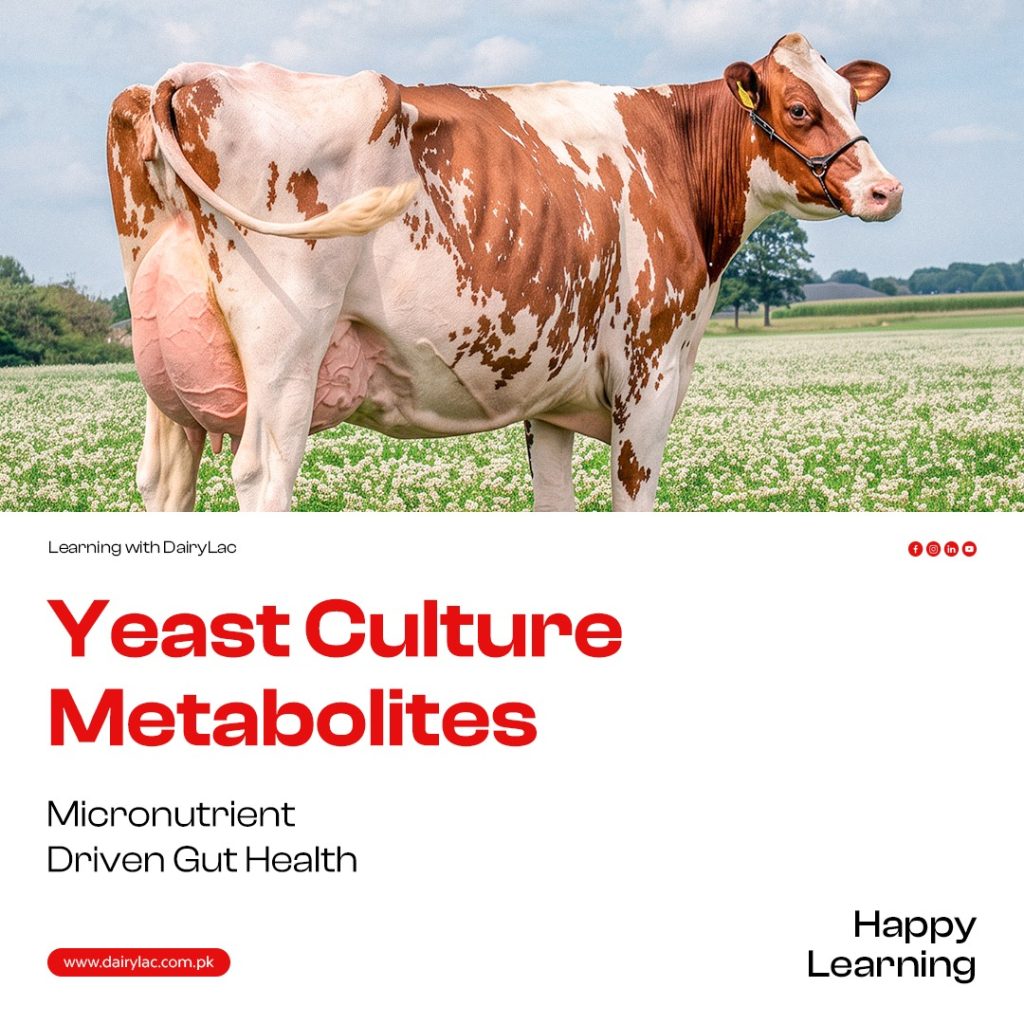
As the global demand for animal products continues to grow, livestock producers are looking for practical ways to improve feed efficiency, animal health, productivity, and sustainability. At the same time, the industry is increasingly focused on reducing reliance on antibiotics and developing more sustainable approaches to animal nutrition.
One technology gaining attention in this area is Yeast Culture Metabolites (YCM). YCM is a postbiotic feed technology produced through controlled fermentation and contains a range of bioactive compounds that can support gut health, nutrient utilization, immunity, and productive performance.
What Are Yeast Culture Metabolites (YCM)?
Yeast Culture Metabolites (YCM) are produced through the controlled fermentation of Saccharomyces cerevisiae and related yeast strains. The resulting fermentation product contains yeast cells, bioactive compounds, and fermentation medium.
YCM provides a combination of important nutritional and functional components, including:
- Beta-1,3/1,6-glucans and Mannan-oligosaccharides (MOS): Support immune modulation and gut health.
- Organic acids: Support antimicrobial activity and intestinal pH regulation.
- Glutamine and glutamate: Provide an energy source for enterocytes and immune cells.
- Selenium-yeast complexes: Support metabolic bioavailability and antioxidant defense.
- B-complex vitamins and enzymes: Include B1, B2, B6, B12, niacin, biotin, folic acid, as well as enzymes such as amylases, proteases, and xylanases.
Through refined metabolite fractions, YCM can provide concentrated postbiotic metabolites at lower inclusion rates, supporting applications in precision nutrition, starter feeds, and premixes.
How YCM Supports Animal Nutrition
YCM works through a chain of nutritional and microbial benefits:
YCM in Feed → Rumen Microbiota Balance → Improved Fermentation → Better Fiber Degradation → Improved Nutrient Utilization → Better Health & Production
By supporting the microbial environment and digestive processes, YCM can help animals utilize nutrients more efficiently.
YCM Benefits for Poultry
YCM can support intestinal health and immune balance in poultry.
Gut Integrity
YCM supports intestinal structure by improving crypt depth and increasing the villus height-to-crypt depth ratio.
Immune Balance
YCM can support mucin-2 expression while helping regulate inflammatory markers such as TNF-alpha, iNOS, and IFN-gamma.
Disease Resilience
Research cited in the provided material indicates that YCM can help maintain intestinal structural health during challenges such as necrotic enteritis.
YCM Benefits for Ruminants and Camels
YCM has several potential applications in ruminant and camel nutrition, particularly where efficient nutrient utilization and production performance are important.
Milk Production and Quality
In treated groups, YCM has been associated with improvements in milk production, with increases of up to 1.10 liters per day, along with improvements in milk fat and solid-not-fat (SNF) content. The provided material also notes benefits during heat-stress conditions.
Metabolic and Reproductive Support
YCM may support metabolic and reproductive performance by helping lower cortisol levels after parturition, improving lysine availability, supporting conception rates, and reducing the incidence of mastitis.
Support for Camel Health
Under semi-intensive management systems, YCM can support nutrient absorption and hematological parameters in camels.
YCM in Aquaculture
YCM is not limited to terrestrial livestock. Its applications also extend to aquaculture, including fish and shrimp production.
Immune Support
In white-leg shrimp, YCM can activate blood-cell signaling pathways and support survival during challenges involving Vibrio parahaemolyticus.
Digestive Efficiency
YCM can stimulate digestive enzymes such as lipases, amylases, and proteases. This can contribute to improved feed conversion efficiency and body composition.
YCM and Climate-Resilient Animal Production
Modern animal production increasingly requires solutions that support both productivity and environmental sustainability. YCM can contribute to this goal through its effects on rumen fermentation, nutrient utilization, and heat-stress management.
Supporting Rumen Fermentation
YCM can influence rumen fermentation pathways toward propionate production. This can divert hydrogen away from methanogens and may help reduce enteric methane emissions.
Improving Nitrogen Utilization
By supporting protein digestibility and better synchronization of energy and nitrogen availability, YCM can reduce undigested nitrogen reaching manure. This may help minimize ammonia volatilization and associated indirect nitrous oxide emissions.
Supporting Animals During Heat Stress
Heat stress can negatively affect feed intake and animal performance. The provided research indicates that YCM can help stabilize body temperature, reduce respiration rates, and maintain more consistent feed intake during elevated Thermal Humidity Index (THI) conditions.
Why YCM Matters for Modern Livestock Nutrition
YCM brings together microbiome science, animal nutrition, gut health, and sustainable livestock production. Its combination of yeast-derived metabolites, bioactive compounds, enzymes, vitamins, and other functional components makes it a useful technology for precision nutrition across different animal species.
For livestock producers, the focus is not simply on adding another feed ingredient. The broader objective is to support better nutrient utilization, healthier animals, improved productivity, and greater resilience under challenging production conditions.
Conclusion
Yeast Culture Metabolites (YCM) represent a next-generation approach to animal nutrition. By supporting gut health, microbial balance, nutrient utilization, immunity, production performance, and heat-stress resilience, YCM has applications across ruminants, poultry, camels, fish, and shrimp.
As the livestock industry continues to focus on efficient and sustainable production, YCM can play an important role in connecting animal health, nutrition, productivity, and climate resilience.
Frequently Asked Questions
What are Yeast Culture Metabolites (YCM)?
YCM are fermentation-derived feed ingredients produced using Saccharomyces cerevisiae and related yeast strains. They contain a range of bioactive metabolites and nutritional compounds that can support animal health and performance.
What does YCM do in animal feed?
YCM can support gut health, microbial balance, nutrient utilization, immunity, digestive efficiency, and productive performance.
Can YCM be used for dairy cattle?
Yes. The provided material identifies ruminants as an important application of YCM and reports benefits related to milk production, milk composition, metabolic support, reproduction, and heat-stress conditions.
Can YCM help during heat stress?
The provided research indicates that YCM can support animals during elevated THI conditions by helping maintain feed intake, stabilize body temperature, and reduce respiration rates.
Is YCM useful only for livestock?
No. The provided material describes applications of YCM in poultry, ruminants, camels, fish, and shrimp.
How does YCM support sustainable livestock production?
YCM may contribute to sustainability by improving nutrient utilization, influencing rumen fermentation, supporting protein utilization, and potentially reducing methane and nitrogen-related environmental losses.